Dental implant problems: screw showing, bumps, dark gums and loose crowns
Short answer
Most dental implants work well for many years, but problems can happen. Metal showing at the gum, a bump or swelling on the gum, darker gums, or a crown that feels loose are all reasons to see your dentist promptly. Many issues, such as a loose screw or a worn crown, can be fixed without removing the implant if they are caught early.
An implant screw or metal showing through the gum
If grey metal becomes visible at the gum line, it may be the edge of the abutment or the implant. This can happen if the gum recedes or the bone around the implant shrinks. It is not always a sign of failure, but your dentist should check it.
A bump or swelling on the gum
A bump, pimple-like swelling or tenderness near an implant can be a sign of inflammation or infection around the implant, sometimes linked to trapped cement or plaque. See your dentist promptly, as early treatment gives the best result.
Dark or grey gums around an implant
A grey tinge can appear when thin gum lets the colour of a titanium abutment show through. In visible areas a zirconia abutment can reduce this. Your dentist can assess whether anything needs to change.
An implant crown that wiggles
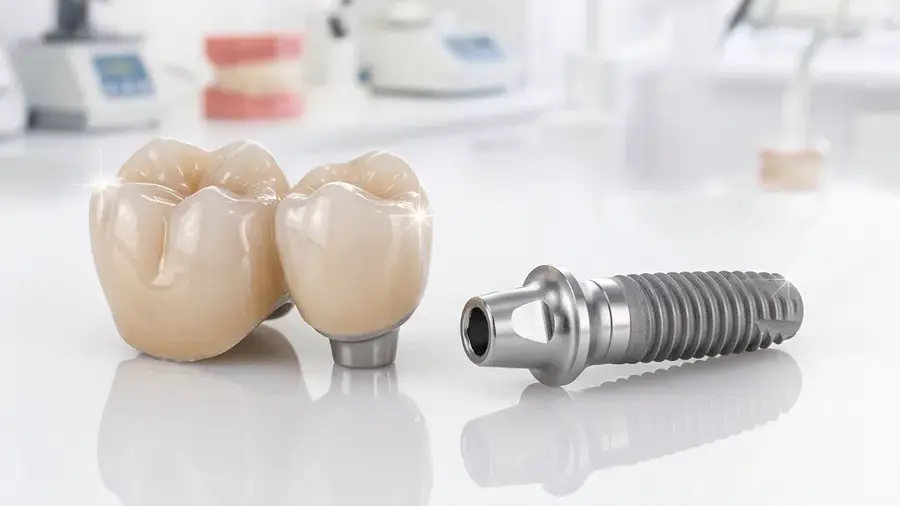
A crown that moves usually means the screw holding the crown or abutment has loosened, or the crown has come unstuck. This is often fixed by tightening or replacing the screw or re-cementing the crown. A loose implant itself is less common and more serious. Either way, see your dentist rather than waiting.
Implant crown problems
- Chipped porcelain on the crown.
- Food trapping between the crown and the neighbouring tooth.
- A crown that feels high when you bite.
- A worn filling over the screw hole on top of the crown.
These can usually be repaired or adjusted, and the dental laboratory can remake the crown if needed.
Does the body reject implants?
True rejection of titanium is very rare. When an implant fails, it is usually because it did not bond fully with the bone, or because of infection around it later, called peri-implantitis. Smoking, gum disease, poorly controlled diabetes and poor cleaning increase the risk.
Preventing problems
- Clean around implants every day with a toothbrush and interdental brushes or floss.
- Keep up regular check-ups and hygiene visits.
- Wear a night splint if you grind your teeth.
- Do not smoke.
Read how long implants last, or see the implant restorations we make.
Frequently asked questions
Why can I see metal at my implant gum line?
Gum recession or bone loss around the implant can expose the edge of the abutment or implant. Your dentist should check it.
What should I do if my implant crown feels loose?
See your dentist soon. Often the screw has loosened and can be tightened or replaced, but it should be checked to rule out a problem with the implant itself.
Can the body reject a dental implant?
True rejection is very rare. Implant failure is usually caused by the implant not bonding with the bone or by infection around it.