Zirconia vs porcelain vs E.max vs gold crowns: which material is right?
Short answer
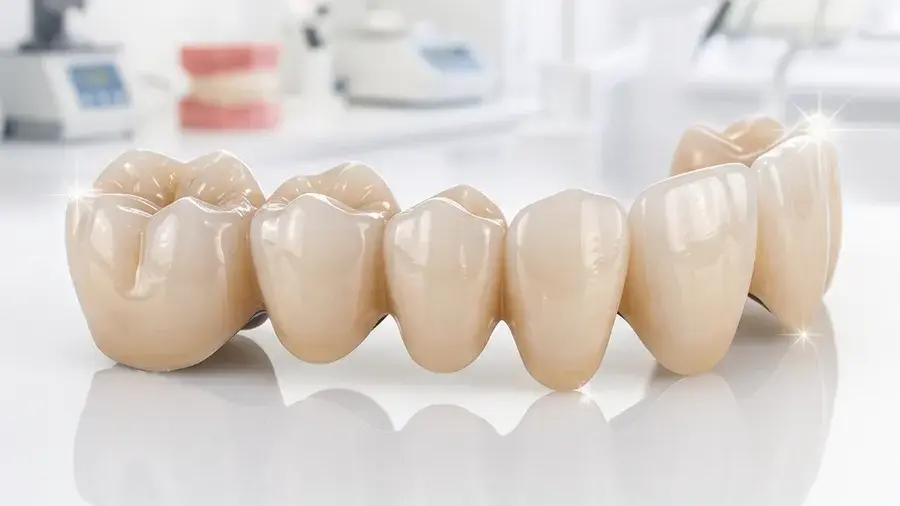
There is no single best crown material. Zirconia is the strongest tooth-coloured option and suits back teeth and bridges. E.max (lithium disilicate) looks the most lifelike and suits front teeth and veneers. Porcelain-fused-to-metal is a long-proven option with a metal core, and gold is very durable and gentle on opposing teeth but is not tooth-coloured. Your dentist chooses based on the tooth, your bite and how important appearance is.
The materials at a glance
| Material | Appearance | Strength | Common uses |
|---|---|---|---|
| Zirconia (monolithic) | Tooth-coloured, slightly more opaque | Very high | Back teeth, bridges, patients who grind |
| Zirconia (layered) | Natural, with a porcelain outer layer | High core; the porcelain layer can chip | Front and back teeth where looks matter |
| E.max (lithium disilicate) | Most lifelike translucency | High for single crowns | Front teeth, veneers, premolars |
| Porcelain-fused-to-metal | Good; a dark line can show at the gum if it recedes | High | Crowns and longer bridges |
| Gold | Gold-coloured | Very high, with minimal tooth reduction | Back teeth |
Zirconia crowns
Zirconia is a very strong ceramic. Made in one solid piece (monolithic), it resists chipping and suits molars, bridges and people who grind or clench. Layered zirconia adds hand-built porcelain over a zirconia core for a more natural look on visible teeth. Zirconia crowns are designed and milled with CAD/CAM, which gives a consistent, accurate fit.
E.max crowns and veneers
E.max is lithium disilicate, a glass-ceramic with translucency close to natural enamel. It is a popular choice for front teeth and veneers where a seamless shade match matters most, and it is strong enough for single crowns on premolars.
Porcelain-fused-to-metal (PFM) crowns
A PFM crown has a metal framework with porcelain fused over it. It has a long track record and is still used where the support of metal is wanted, such as longer bridges. Over time, if the gum recedes, a thin dark line at the edge of the crown can become visible, which is one reason many front-tooth crowns are now metal-free.
Gold crowns
Cast gold alloy crowns are extremely durable, need very little of the tooth to be removed, and wear gently against the opposing teeth. They remain a strong choice for back teeth where appearance is less important.
Which material for which tooth?
- Front teeth: E.max or layered zirconia, for the most natural shade and translucency.
- Back teeth: monolithic zirconia or gold, for strength under chewing forces.
- Bridges: zirconia or porcelain-fused-to-metal, depending on the span and the bite.
- Grinding or clenching: monolithic zirconia or gold, and often a night splint to protect the work.
The final choice is a clinical decision made by your dentist. Dentists can see the materials we work in on our crown and bridge page, or read about what affects crown cost.
Frequently asked questions
Which crown material is strongest?
Monolithic zirconia and gold are the strongest options. Zirconia is tooth-coloured, while gold is not.
Which crown looks most natural?
E.max and layered zirconia give the most natural appearance, which is why they are often chosen for front teeth.
Are metal-free crowns better?
Metal-free crowns such as zirconia and E.max avoid a dark line at the gum and look more natural, but metal-based crowns are still very durable. The best option depends on the tooth and your bite.
Can a zirconia crown be whitened?
No. Crowns do not change colour with whitening. If you want whiter teeth, whiten your natural teeth first so the crown can be matched to the new shade.