How to clean and care for dentures, and when to get them repaired
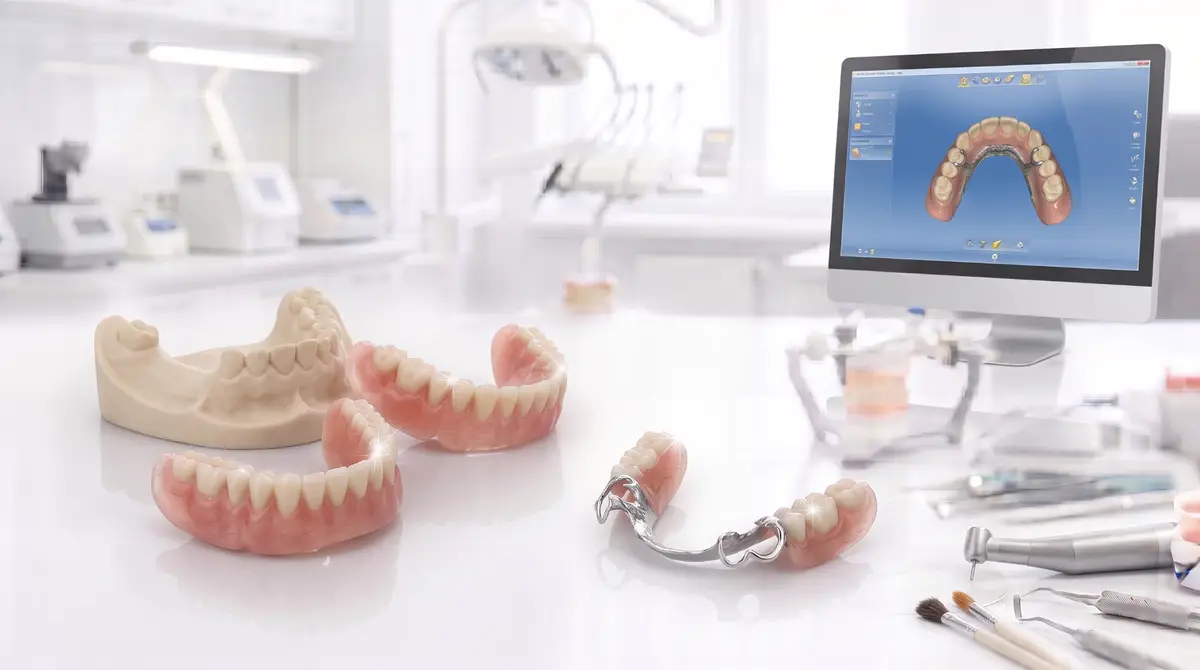
Short answer
Clean your dentures every day with a soft denture brush and a non-abrasive denture cleaner, rinse them after meals, and keep them in water or a soaking solution whenever they are out so they do not dry out. Avoid regular toothpaste, hot water and bleach. If a denture cracks, loses a tooth or starts to feel loose, see your dentist or clinical dental technician rather than repairing it yourself.
A daily cleaning routine
- Take the denture out and rinse it under cool or lukewarm running water to remove loose food.
- Brush every surface gently with a soft denture brush and a denture cleaner or mild soap.
- Soak it in a denture cleaning solution if your dentist recommends one, then rinse it well before putting it back in.
- Brush your gums, tongue and any remaining natural teeth with a soft toothbrush.
- Clean over a folded towel or a basin of water, so the denture does not break if you drop it.
What to avoid
- Regular toothpaste: most are abrasive and leave tiny scratches that collect stains and bacteria.
- Hot or boiling water: it can warp the acrylic and change the fit.
- Bleach: it can whiten the pink acrylic and corrode metal clasps and frameworks.
- DIY repair glues and home adjustments: they can make the fit worse and make a proper repair harder.
Overnight
Unless your dentist advises otherwise, take your dentures out overnight to give your gums a rest. Store them in water or a soaking solution so the acrylic does not dry out and change shape.
Partial dentures with metal clasps
Chrome cobalt partials and dentures with metal clasps should be cleaned with a product that is safe for metal. Avoid bleach and chlorine-based cleaners, which can corrode the metal.
Signs your denture needs attention
- It feels loose, rocks when you chew, or needs more adhesive than before.
- It causes sore spots or ulcers on the gums.
- There is a crack, a chip or a missing tooth.
- A clasp has bent or broken.
- Your bite feels different, or the denture has become hard to clean.
Repairs, additions and relines
Most broken dentures can be repaired by a dental laboratory. If you lose another natural tooth, a tooth can often be added to an existing partial denture. When the gums change shape, a reline adds new material to the fitting surface so the denture fits closely again. Your dentist or clinical dental technician will arrange the repair or reline with a laboratory.
Dentists can find out about our denture repairs, additions and relines on the removable prosthetics page, and patients can read more about types of removable dentures.
Frequently asked questions
Can I use toothpaste to clean my dentures?
It is best not to. Most regular toothpastes are abrasive and leave tiny scratches. Use a denture cleaner or mild soap with a soft denture brush instead.
Should I sleep in my dentures?
Unless your dentist advises otherwise, take them out overnight to rest your gums, and keep them in water or a soaking solution.
Can a broken denture be fixed?
Usually, yes. Most cracks, chips and missing teeth can be repaired by a dental laboratory. Your dentist or clinical dental technician will arrange it.
What is a denture reline?
A reline adds new material to the fitting surface of a denture so that it fits closely again after the gums have changed shape.