What is a dental bridge? Traditional, cantilever and Maryland bridges explained
Short answer
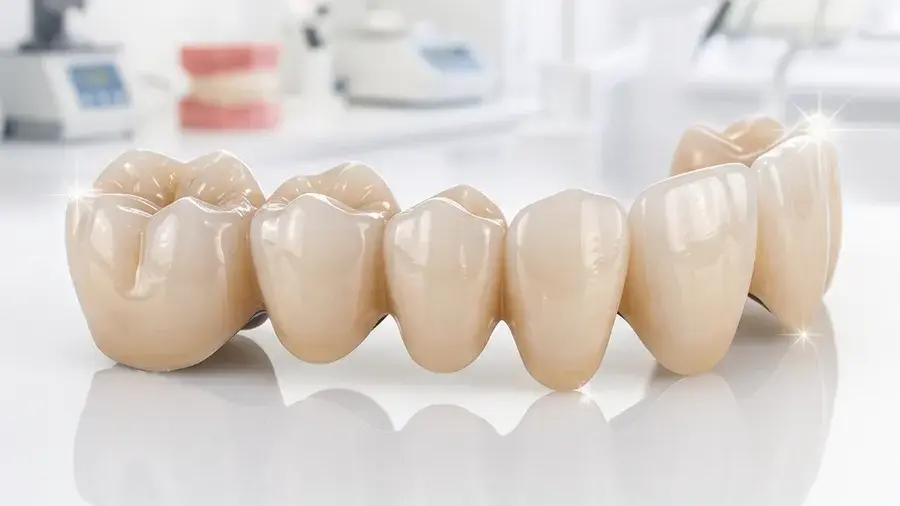
A dental bridge replaces one or more missing teeth by joining a false tooth, called a pontic, to crowns or bonded wings on the teeth beside the gap. It is fixed in place, so unlike a denture it does not come out. The main types are traditional, cantilever, Maryland (resin-bonded) and implant-supported bridges.
How a bridge works
A bridge “bridges” a gap. The replacement tooth sits in the space and is held by the teeth on one or both sides, called abutment teeth, or by dental implants. Because it is cemented or screwed in place, it feels and works much like natural teeth.
Types of dental bridge
- Traditional bridge: crowns on the teeth either side of the gap hold the false tooth between them. It is the most common type and is very strong.
- Cantilever bridge: the false tooth is supported from one side only. It is used where there is a suitable tooth on just one side of the gap.
- Maryland (resin-bonded) bridge: thin wings are bonded to the back of the neighbouring teeth, so very little tooth needs to be removed. It is often used for a single front tooth.
- Implant-supported bridge: the bridge is held by dental implants instead of natural teeth, which suits longer gaps. See our implant restorations.
A bridge for one tooth or front teeth
A single missing tooth can be replaced with a short bridge. For front teeth, appearance matters most, so the pontic is usually made in E.max or layered zirconia and shade-matched closely to the teeth around it. A Maryland bridge is often considered for a front tooth when the neighbouring teeth are healthy and unfilled.
Bridge, implant or partial denture?
| Option | Fixed or removable | Affects neighbouring teeth | Surgery |
|---|---|---|---|
| Bridge | Fixed | Usually, as they are crowned or bonded | No |
| Implant crown | Fixed | No | Yes, to place the implant |
| Partial denture | Removable | Clasps rest on them | No |
Your dentist will recommend the option that suits your teeth, gums, bone and budget. Read more about dental implants and removable dentures.
Temporary bridges
While the final bridge is being made in the lab, your dentist may fit a temporary bridge to protect the prepared teeth and fill the gap. Lab-made PMMA temporaries can also be used to trial the shape and bite before the final bridge is made.
What affects the cost of a bridge
- How many teeth the bridge replaces and how many supporting teeth need crowns.
- The type of bridge and the material.
- Any treatment needed first, such as a root canal on a supporting tooth.
Looking after a bridge
Brush twice a day and clean under the false tooth every day with floss threaders, super floss or small interdental brushes, so plaque does not build up around the supporting teeth. Regular check-ups let your dentist keep an eye on the teeth holding the bridge.
Frequently asked questions
Is a dental bridge permanent?
A bridge is fixed in place and is not removed at home. It can last many years with good care and can be replaced if it ever needs to be.
Can a bridge replace a front tooth?
Yes. Bridges are often used for front teeth, including Maryland bridges that need very little change to the neighbouring teeth.
How many teeth can a bridge replace?
It depends on how strong the supporting teeth or implants are and where the gap is. Your dentist will advise on the right length of bridge.
Do the teeth next to the gap have to be filed down?
For a traditional bridge, the supporting teeth are shaped to take crowns. A Maryland bridge is bonded to the back of the teeth and needs very little preparation.